There is a moment in the Riverdance 25th Anniversary Show that captures a quiet shift in the world of filmed performance. The stage feels grand. The camera feels close. The movement is alive in a way that does not compete with the theatre but instead extends it. The experience feels both intimate and cinematic. This balance did not come from chance. It came from Chris Hunt’s lifelong effort to find the right language for performances that live on screen.
For more than four decades, Hunt has shaped how global audiences experience music and theatre without ever being in the room. He stepped into this field long before it was fashionable or commercially safe. He saw filmed performance not as a simple record of events but as an art form that needed its own rules. The work he went on to create helped define those rules and set a standard that continues to influence the industry today.
The Early DNA of a Style
Hunt’s approach began forming early in his career. His years at the BBC taught him how to observe carefully and let stories breathe. Programs like The Antiques Roadshow trained him to respect the subjects he filmed and to understand how to capture truth without forcing it. When he later moved to The South Bank Show, he stepped deeper into the world of high culture and performance. Here he learned how to translate the energy of artists into a visual language that felt natural and honest.
That period shaped his instincts. He gained a documentary maker’s eye for small human details. He developed the sensitivity of a theatre director who protects the integrity of a performance. He built a journalist’s instinct for what really matters. And he sharpened the rhythm of an editor who knows when to let silence reveal emotion. These early influences became the foundation of his signature style. They also gave him the confidence to build something of his own.
Inventing the Blueprint for Modern Arts Documentaries
By the late 1980s, Hunt saw gaps in how arts programming was being produced. This led him to form Iambic Productions in 1988. The company became a place where music and performance documentaries were produced with a level of care rarely seen on television at the time.
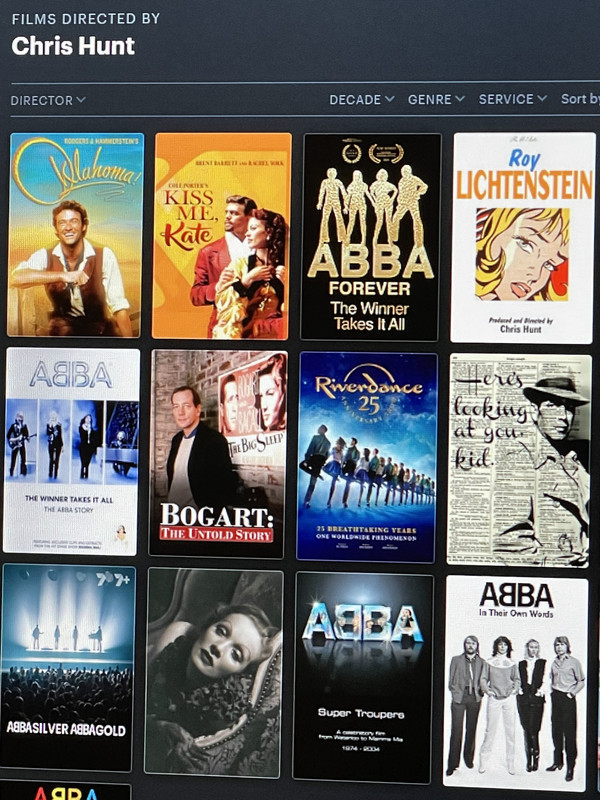
Some of Iambic’s films became defining cultural moments. The Abba Story introduced a fresh way of telling the band’s journey by mixing narrative clarity with emotional precision. Jose Carreras – A Life Story gave viewers a deeper sense of the singer’s personal world rather than a simple career summary. Oklahoma! delivered the full scale of the musical yet kept the camera close enough to preserve the emotional pulse of the performance.
These projects helped set new standards for the genre. They showed that rhythm matters in this kind of storytelling. They showed that music can shape the editing. They showed that performance can be powerful even when filtered through a lens. Audiences around the world connected with these films because they felt immersive and human. Many of these choices are now common practice in the industry. Hunt was doing them decades earlier.
The Executive Who Could Still Tell a Story
In 1999, Hunt moved into a rare position. He became the founding CEO of DCD Media, a publicly listed production group created at a time when independent companies were trying to grow into global players. Many creative leaders struggle when placed into an executive chair. Hunt did not. He took the role and expanded it.
At DCD Media, he led acquisitions that helped the company grow into a diverse and international production force. He brought in Prospect Pictures, September Films, and West Park Pictures. He also championed global distribution strategies at a time when digital platforms were still taking shape. His decisions showed a clear understanding of how arts content could travel across borders and how it could scale commercially without losing its personality.
This period proved that he could merge creativity with strong business judgment. It is a rare mix. It strengthened his reputation in the industry and gave him the freedom to build new ventures after leaving the company in 2008.
Why Filmed Performance Matters
The value of filmed performance goes far beyond entertainment. Live performances disappear once the curtain falls. A filmed performance captures something that would otherwise be lost. It becomes a cultural record.
Hunt’s work has preserved voices and visions that shaped entire generations. Films on Maria Callas reveal an artist whose presence still feels immediate. His work on ABBA documents the emotional layers behind a group that influenced global pop. His films on Zeffirelli and Domingo safeguard the craft of two of the most important figures in their fields. When viewed together, these films form a wide cultural archive. They protect the artistic DNA of different eras and ensure that new audiences can understand where these traditions come from.
Stanza, Stagescreen, and the Future of the Format
After returning to hands-on filmmaking, Hunt founded Stanza Media in 2015. The company became a home for high quality music and theatre films that combined cinematic polish with emotional honesty. Stanza’s work on artists like Queen, Kylie Minogue, and George Michael reflects Hunt’s belief that filmed performance should feel alive, modern, and accessible.
His next venture, Stagescreen, pushed the field even further. By creating full scale film versions of major stage productions and distributing them across cinemas and streaming platforms, Stagescreen offered a new model for theatre in a digital age. The Riverdance 25th Anniversary Show proved the commercial potential of this approach. It showed that audiences around the world want theatre experiences that are both authentic and beautifully filmed.
This model continues to grow. The company has captured productions such as A Night With Janis Joplin and Bat Out of Hell. Hunt’s focus on quality and access reflects a new understanding of how theatre can survive and thrive in a global market.
What Comes Next
As the industry continues to move toward streaming and digital-first consumption, the importance of filmed performance is rising. The question now is simple. Are we entering a golden age of captured theatre?
If so, Chris Hunt’s work will be a major influence on what that age looks like. He has spent his career shaping the language used to film performance. He has protected the soul of live art while expanding its reach far beyond physical theatres. And he has built a legacy that helps future filmmakers understand how to respect the stage while using the camera to unlock new energy.
Hunt did not just document culture. He helped shape how we see it.