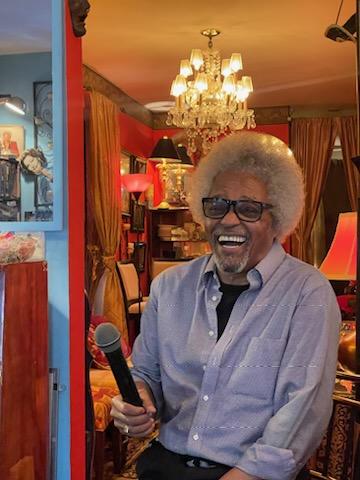
Much of what we know about jazz comes from fragments. Liner notes that hint at a session. Academic essays that arrive years later. A photograph with names half remembered. For a music born in rooms where memory traveled faster than paper, this should not be surprising. Jazz lived through conversation long before it lived through institutions. JaRon Eames arrived at a moment when many of its architects were still alive, still talking, and still unguarded. He understood that once those voices fell silent, no amount of scholarship could replace what was never written down.
The Archivist Who Did Not Ask Permission
The JaRon Eames Show did not begin with grants, endowments, or institutional backing. It began with curiosity and urgency. Airing on public access television, the show operated outside the gates that often decide what is worthy of preservation. That distance mattered. Eames did not need approval to ask questions or record conversations. He did not wait for museums or universities to recognize value. Public access television became a radical tool in his hands. It allowed him to document jazz history as it was being spoken, not as it would later be interpreted. In doing so, he challenged the idea that archiving requires authority. Sometimes it requires presence.
Letting Legends Speak Without Translation
Eames’ interview style is deceptively simple. He listens. He allows pauses. He does not rush stories toward conclusions. When artists like Nancy Wilson, Little Jimmy Scott, or Joe Williams sat with him, they were not being framed or corrected. They were being heard. Their humor remained intact. Their contradictions were not edited out. Eames understood that translation can distort memory. By resisting the urge to explain or sanitize, he preserved cadence and character. These conversations carry the texture of lived life. They sound like people remembering, not like history being arranged.
Addiction, Loss, and the Cost of Genius
In his memoir Tainted, Eames writes about his own descent into addiction, false imprisonment, and the long road back. This personal history matters to his archival work. It gave him a deep empathy for artists whose brilliance existed alongside pain. Jazz history is filled with figures whose struggles were minimized or romanticized. Eames did neither. He recognized the cost of genius because he had paid a price himself. That awareness shaped how he listened. He did not reduce artists to legends. He allowed them to be human, flawed, and complex. In doing so, he honored the full truth of their lives.
The Danger of Sanitized Jazz History
As jazz entered academic spaces, something subtle shifted. Nightlife disappeared from the narrative. Conflict softened. Moral complexity faded. What remained was often impressive, but incomplete. Sanitized history is easier to teach and easier to celebrate. It is also less honest. Eames’ archive resists this flattening. His interviews acknowledge the clubs, the late nights, the arguments, and the survival instincts that shaped the music. Jazz did not emerge from quiet rooms or safe circumstances. It came from lived tension. By preserving that context, Eames protected jazz from becoming decorative.
Why Timing Matters More Than Technology
Technology often receives credit for preservation, but timing is just as important. Eames captured voices before they were filtered by legacy or managed by estates. He spoke with artists while they were still thinking out loud about their lives. Little Jimmy Scott and Joe Williams were not performing their histories. They were remembering them. This window was brief. Once it closed, technology alone could not reopen it. Eames understood that preservation is an act of timing and courage. You must show up before the story hardens into something rehearsed.
The Quiet Urgency of Preservation
The greatest threat to cultural memory is not destruction. It is neglect. When figures like JaRon Eames disappear without successors, something irreplaceable goes with them. His work reminds us that preservation is not passive. It demands attention, humility, and responsibility. Black jazz culture carries a fragile memory shaped by oral tradition and lived exchange. Without listeners who know how to listen, those memories fade. Eames did not treat archiving as a hobby or side project. He treated it as a moral act. The cost of forgetting is not abstract. It is measured in voices that are never heard again and stories that never reach the next room.